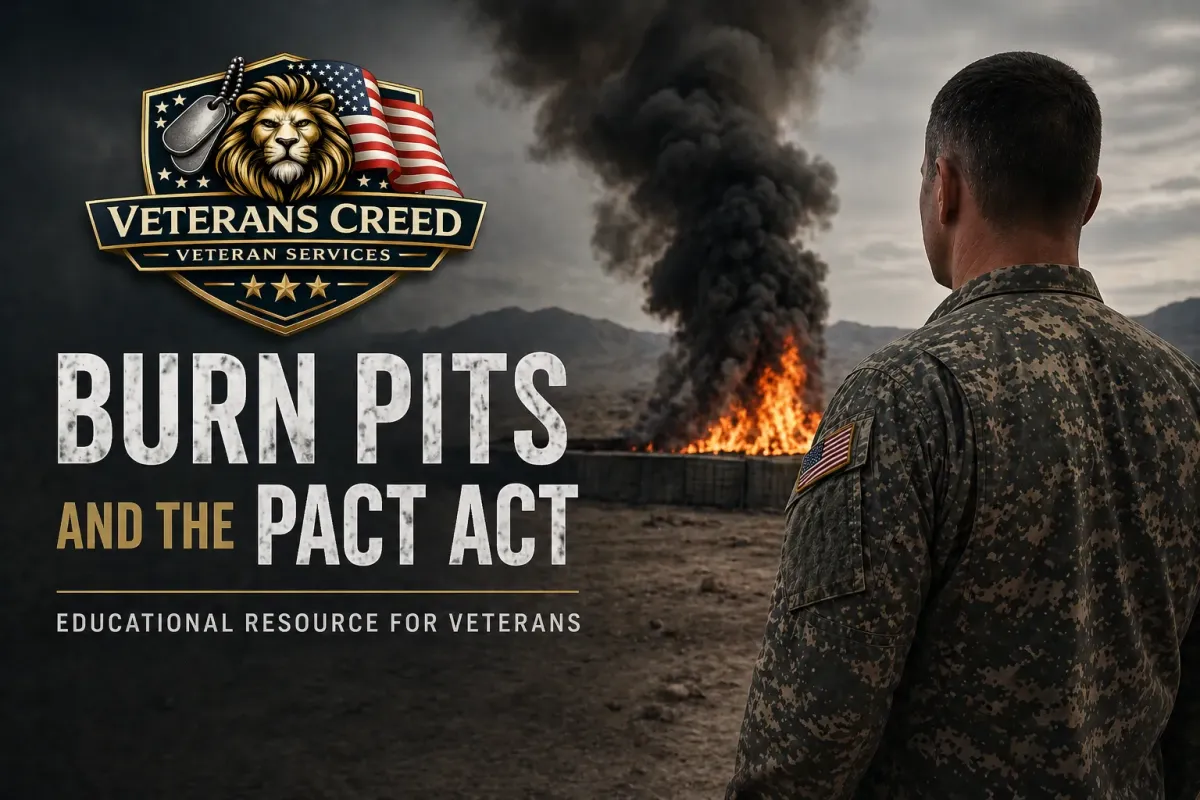
Burn Pit and the PACT ACT
1. Purpose of This Training Resource
This training resource is designed to provide education and guidance regarding burn pit exposure and its potential health effects on military veterans. The guide also explains how veterans may pursue disability compensation and healthcare benefits through the Department of Veterans Affairs (VA).
This manual is intended for use by:
• Veterans seeking information about toxic exposure
• Veteran service representatives and advocates
• Claims advisors and consultants
• Organizations assisting veterans with disability claims
• Staff conducting client orientation or training sessions
The goal of this guide is to help individuals understand burn pit exposure, recognize possible health conditions associated with toxic exposure, and learn how to properly navigate the VA claims process.
2. Background: Military Waste Disposal in Combat Zones
Military bases generate large amounts of waste every day. This waste includes food, packaging, medical supplies, damaged equipment, and various hazardous materials.
In combat zones or remote deployments, waste management systems are often limited. During the wars in Iraq and Afghanistan, many bases lacked proper incinerators or waste processing facilities.
As a result, the military frequently used burn pits as a quick and simple method of disposing of waste.
Large military installations could produce tens of thousands of pounds of waste each day. Burn pits became the most practical method to manage this volume under difficult logistical conditions.
However, because burn pits burned many different types of materials in open air, the smoke produced often contained toxic chemicals and pollutants that could affect the health of nearby personnel.
3. What Are Burn Pits
Burn pits are open-air waste disposal areas where trash is burned directly in the environment.
They typically consist of large pits dug into the ground where waste materials are dumped and ignited.
Once the waste is burning, additional trash is continuously added to the fire. The burning process can continue day and night depending on the volume of waste generated by the base.
Key characteristics of burn pits include:
• Open-air burning without environmental controls
• Continuous disposal of mixed waste materials
• Use of fuel accelerants such as JP-8 jet fuel
• Large plumes of smoke drifting across base areas
Unlike regulated incinerators, burn pits do not filter toxic emissions. As a result, smoke from these pits may contain dangerous pollutants that can travel long distances depending on weather conditions and wind direction.
4. Locations Where Burn Pits Were Used
Burn pits were used extensively during military operations in Southwest Asia and surrounding regions.
Veterans who served in these areas may have been exposed to burn pit smoke.
Common locations include:
Iraq
• Joint Base Balad
• Camp Victory
• Camp Taji
• Camp Anaconda
Afghanistan
• Bagram Airfield
• Kandahar Airfield
• Camp Leatherneck
Other Countries
• Kuwait
• Saudi Arabia
• Bahrain
• Qatar
• Oman
• United Arab Emirates
• Djibouti
• Syria
• Uzbekistan
Some of these burn pits operated for many years and burned massive amounts of waste daily.
5. Materials Burned in Burn Pits
Burn pits were used to dispose of a wide variety of waste materials generated by military bases.
Because there were often no restrictions on what could be burned, the pits contained both ordinary trash and hazardous materials.
General Waste
Examples include:
• Food scraps
• Paper products
• Cardboard boxes
• Plastic packaging
• Styrofoam containers
• Wood pallets
• Clothing and uniforms
Hazardous Materials
Examples include:
• Paint and paint thinners
• Cleaning solvents
• Petroleum products
• Lubricants
• Chemicals and pesticides
Medical Waste
Examples include:
• Used bandages and gauze
• Syringes and needles
• Blood-contaminated materials
• Pharmaceuticals
Military Equipment Waste
Examples include:
• Broken electronics
• Vehicle parts
• Metal scrap
• Ammunition components
Because all of these materials were burned together in open air, the smoke released from burn pits contained complex mixtures of toxic chemicals.
6. Toxic Chemicals Produced by Burn Pits
Burn pits produce numerous harmful pollutants due to the incomplete burning of mixed waste materials.
Some of the most concerning pollutants include:
Particulate Matter (PM)
These are microscopic particles suspended in the air. Very small particles known as PM2.5 can travel deep into the lungs and enter the bloodstream.
Volatile Organic Compounds (VOCs)
These chemicals easily evaporate into the air and can cause irritation to the respiratory system.
Examples include:
• Benzene
• Toluene
• Formaldehyde
Dioxins and Furans
These are highly toxic environmental pollutants that can accumulate in human tissue and may increase cancer risk.
Polycyclic Aromatic Hydrocarbons (PAHs)
These chemicals form when organic materials burn incompletely. Many PAHs are known carcinogens.
Heavy Metals
Burn pits may release heavy metals including:
• Lead
• Mercury
• Arsenic
• Cadmium
Exposure to these substances over time may damage organs, weaken immune systems, and contribute to chronic disease.
7. How Service Members Were Exposed
Personnel stationed near burn pits may have been exposed to toxic emissions through several pathways.
Inhalation
The most common exposure occurs when individuals breathe in smoke or contaminated air from the burn pits.
Skin Contact
Ash and contaminated dust may settle on skin, clothing, or equipment.
Environmental Spread
Wind may carry smoke and pollutants across large areas of a military base.
Personnel most likely to experience exposure include:
• Burn pit operators
• Troops living near burn pits
• Maintenance workers
• Contractors
• Medical staff
• Base personnel
Even individuals who were not directly working at the pits could still be exposed due to wind patterns and the constant burning of waste.
8. Health Conditions Reported by Veterans
Many veterans who served near burn pits have reported health problems following their deployments.
Research is ongoing, but several conditions appear frequently in reported cases.
Respiratory Conditions
Examples include:
• Asthma
• Chronic bronchitis
• Chronic cough
• Sinusitis
• Chronic obstructive pulmonary disease (COPD)
Other Symptoms
Common symptoms reported by veterans include:
• Shortness of breath
• Chest tightness
• Persistent fatigue
• Eye irritation
• Skin rashes
• Headaches
Cancer Concerns
Some veterans have developed cancers potentially associated with toxic exposure.
Examples include:
• Lung cancer
• Brain cancer
• Head and neck cancers
• Gastrointestinal cancers
• Blood cancers
Because many cancers take years to develop, symptoms may appear long after service has ended.
9. The Airborne Hazards and Burn Pit Registry
The Department of Veterans Affairs created the Airborne Hazards and Open Burn Pit Registry to help track exposure among veterans.
This registry allows veterans to record their:
• Deployment locations
• Exposure history
• Health symptoms
• Medical concerns
The registry helps researchers study long-term health effects and provides veterans with documentation of potential exposure.
Participation in the registry is voluntary but strongly encouraged.
10. The PACT Act
The Promise to Address Comprehensive Toxics Act (PACT Act) was passed in 2022 to expand healthcare and benefits for veterans exposed to toxic substances during military service.
The PACT Act represents one of the most significant expansions of veteran healthcare benefits in decades.
Key provisions include:
• Expanded eligibility for VA healthcare
• Recognition of new presumptive medical conditions
• Increased funding for toxic exposure research
• Improved disability claims processing
The law helps ensure that veterans exposed to burn pits and other hazards receive better access to healthcare and disability compensation.
11. Presumptive Conditions
The PACT Act established several presumptive conditions for veterans exposed to burn pits and airborne hazards.
A presumptive condition means the VA assumes the illness is connected to military service if the veteran served in qualifying locations.
Examples of presumptive conditions include:
Respiratory Illnesses
• Asthma diagnosed after service
• Chronic bronchitis
• Chronic sinusitis
• Chronic rhinitis
Certain Cancers
Examples include:
• Brain cancer
• Lung cancer
• Head and neck cancers
• Pancreatic cancer
• Kidney cancer
• Gastrointestinal cancers
These presumptions make it easier for veterans to qualify for benefits without needing to prove the exact exposure event.
12. VA Disability Claims Process
Veterans who believe they were affected by burn pit exposure may file a disability claim with the Department of Veterans Affairs.
To approve a claim, the VA generally requires:
A current medical diagnosis
Evidence of military service in a qualifying area
A connection between illness and military service
If a condition is considered presumptive under the PACT Act, the third requirement may be automatically satisfied.
13. Evidence That Can Strengthen a Claim
Veterans should gather as much supporting documentation as possible when filing a claim.
Helpful evidence includes:
Military Documentation
• Deployment orders
• Unit assignments
• Service records
Medical Documentation
• Physician diagnoses
• Imaging scans
• Laboratory tests
• Specialist reports
Exposure Documentation
• Burn Pit Registry participation
• Base assignment records
• Buddy statements from fellow service members
The more evidence available, the stronger the claim may be.
14. Steps to File a Burn Pit Claim
Step 1 – Obtain a medical diagnosis.
Step 2 – Confirm deployment in a qualifying location.
Step 3 – Submit a disability claim through the VA system.
Step 4 – Attend a VA Compensation and Pension (C&P) examination if scheduled.
Step 5 – Wait for the VA to review the evidence and issue a decision.
15. Key Training Takeaways
• Burn pits were widely used during military operations in Southwest Asia.
• Smoke from burn pits contained numerous toxic pollutants.
• Many veterans have reported respiratory illnesses and other health conditions.
• The PACT Act expanded benefits for veterans exposed to toxic hazards.
• Proper documentation and medical evidence are essential for VA disability claims.